
WALL DESIGN
WALL PANEL WITH HIDDEN FIXING


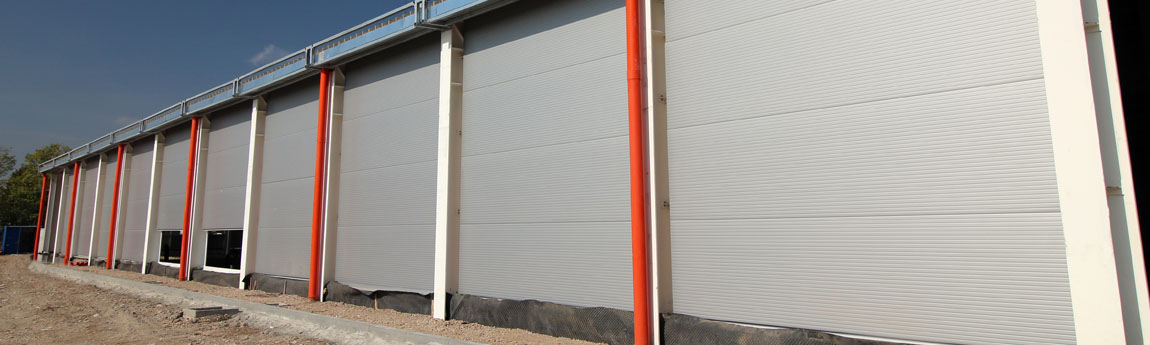
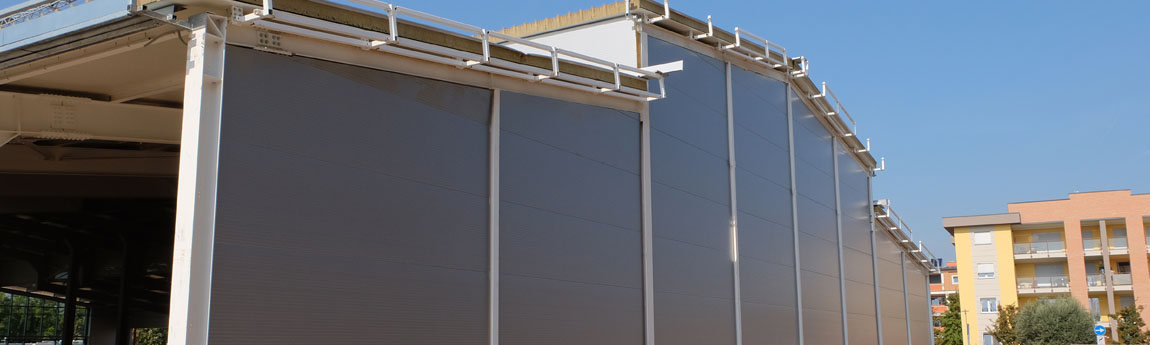
WALL DESIGN is the insulated sandwich panel for walls with hidden fixing, ideal for horizontal installation, as it allows assembly from the bottom upwards, it is widely used in the cladding of prefabricated modules, guaranteeing an excellent cost-performance ratio and combining aesthetics, lightness, resistance, thermal insulation, ease of installation and compliance with fire regulations.
– The specifications below are not to be considered product standards, but vary depending on the design needs and what is required during the contractual definition phase. –
DIMENSIONS
Width 1000 mm.
Length upon request from continuous production process.
THICKNESSES
40 – 50 – 60 – 80 – 100 – 120 – 140 – 150 – 160 mm
Panels of not standard thicknesses can be supplied upon request previous agreement on minimum quantities.
SUPPORTS
- Pre-painted or plasticized galvanized steel.
- Aluzinc.
- Stainless steel.
- Natural or pre-painted aluminium.
INSULATION
Polyurethane resins (PUR) and (not standard) polyisocianurate foams (PIR), density 39 ±2 Kg/m³.
Declared value of thermal transmittance for a panel after 25 years of its installation, (Appendix C – EN 13165) Initial value of thermal conductivity: λ = 0.020 W/(mK).
PROTECTIVE TREATMENT
- Pre-painting with polyester.
- Superpolyester (HD).
- PVDF.
- Polyurethane PUR/PA.
- Plastisol.
- Plasticized PVC with thicknesses between 15 e 200 µm.
- Availability on request of other films and non-toxic coatings for occasional contact with food.
INSIGHTS PIR FOAM
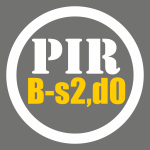
On request is available in PIR foam version (polyisocyanurate), a particular polymeric structure that guarantees excellent characteristics of fire behavior. The entire range of ISOLPACK panels has been certified in Class B-s2,d0 at CSTB (France) and at KIT (Germany) in compliance with UNI EN 13823 (SBI) * where, “B” expresses the quantity of heat produced during the first 600 seconds of the test <7.5 MJ (best value obtainable for foamed products); “S2” represents a very low development of the fumes and “d0” indicates the absolute absence of drops and/or inflamed particles. In last years, the SBI test has become a standard requirement in Europe for fire behavior of building materials. The new European standard for sandwich panels – UNI EN 14509 – uses the SBI system for fire classification purposes. ISOLPACK is the only one in Italy to design light, highly insulating applications with unequaled fire reaction requirements. In many cases it can replace the rock wool panel considering its fire reaction characteristics combined with the very high thermal insulation power.
EPD CERTIFICATION (CAM)
The entire range of roofing and wall panels in steel and aluminium in PIR, PUR and mineral wool, single metal sheet panels and corrugated metal sheets in steel and aluminium, possess the EPD type III – EN ISO 14025 certification, meeting the requirements of compliance with the regulation construction DM 23 June 2022, and satisfying the required CAM criteria.
PRODUCT
Download the useful documents: dimensions, loading tables, transmittances and all the technical characteristics of the product.
 Profile Dimensions
CATALOGUES AND GROUP
Download the complete catalogues of the Group’s production companies and discover the entire product range.
TECHNICAL DOCUMENTATION
Download the conditions of sale and the documentation for the correct storage and use of the materials.
TECHNICAL AREA
Sign up and access the Technical Area to download Isolpack BIM models for Autodesk Revit, product DWG files, and exclusive design content.
– The certifications listed below are not to be considered product standards, but must be requested in advance based on the design needs and indicated during the contractual phase. –




| FIRE REACTION | THICKNESSES | |||||||||||
|---|---|---|---|---|---|---|---|---|---|---|---|---|
| CLASS | MATERIAL | CATEGORY | PRODUCT | 40 | 50 | 60 | 80 | 100 | 120 | 140 | 150 | 160 |
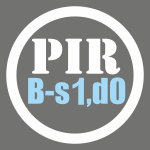
| B-s1,d0 | PIR POLYURETHANE | WALL | WALL DESIGN | x | x | x | x | x | ||||
| B-s2,d0 | PIR POLYURETHANE | WALL | WALL DESIGN | x | x | x | x | x | x | x | x | x |
The reaction to fire classification was obtained according to the EN 13501:2007+A1:2009.


